Overview
Motor development is more than physical growth—it forms the foundation for how children interact with their environment, regulate their behavior, and engage in learning. From birth through age eight, the PK–3 window represents a uniquely sensitive period when motor systems are rapidly maturing and closely intertwined with cognitive, language, and social development. During these years, the neural circuits that support movement, attention, and executive function are especially responsive to experience and practice.
As children’s motor skills progress from reflexive movements to goal-directed, coordinated actions, they are also building the neural and cognitive systems that support executive function, attention, and problem-solving. Early motor experiences—reaching, grasping, crawling, drawing, climbing—literally help “wire” the brain for learning.

In educational settings, fine and gross motor development plays a critical role in school readiness and academic success. Fine motor skills underpin essential classroom activities such as writing, cutting, and manipulating learning materials, while gross motor abilities support postural control, balance, and sustained attention. Research also shows that movement supports cognitive development—children often learn best through active, embodied experiences that connect physical movement to thought and language.
For educators, this means that early, intentional support for motor skill development is not optional—it’s foundational. Rather than a “wait and see” approach, timely instruction and intervention in motor development can strengthen the very systems that underlie children’s ability to focus, persist, and learn across all domains.
Why is understanding motor development important for educators?
Motor development shapes far more than how children move — it affects how they learn, communicate, and participate in classroom life. Understanding the milestones and variability in motor growth allows educators to better interpret children’s behaviors and design activities that meet them where they are developmentally.
Below are examples of how motor development connects to everyday teaching and learning:
Early Childhood – The Emerging Writer
Amira, a kindergartner, avoids drawing and writing tasks. She grips her pencil tightly, tires quickly, and sometimes gets frustrated and refuses to finish. Her teacher initially wonders if she’s being oppositional or disinterested in literacy.

Educator Insight: Knowledge of fine motor development helps the teacher see that Amira may still be building the small-muscle strength and hand-eye coordination needed for writing. Offering activities like playdough rolling, tweezer sorting, or tracing in sand can strengthen her finger control while keeping her engaged. The teacher also introduces adaptive pencils and allows short movement breaks — scaffolds that turn frustration into progress.
Key Takeaway: Understanding the fine motor underpinnings of handwriting helps teachers distinguish delays in motor skills from motivation or behavior issues.
Preschool – The Active Explorer
Mateo, a four-year-old, has difficulty sitting for circle time. He often fidgets, rocks, or stands up to move around. When redirected, he can focus for a short time but then becomes restless again.
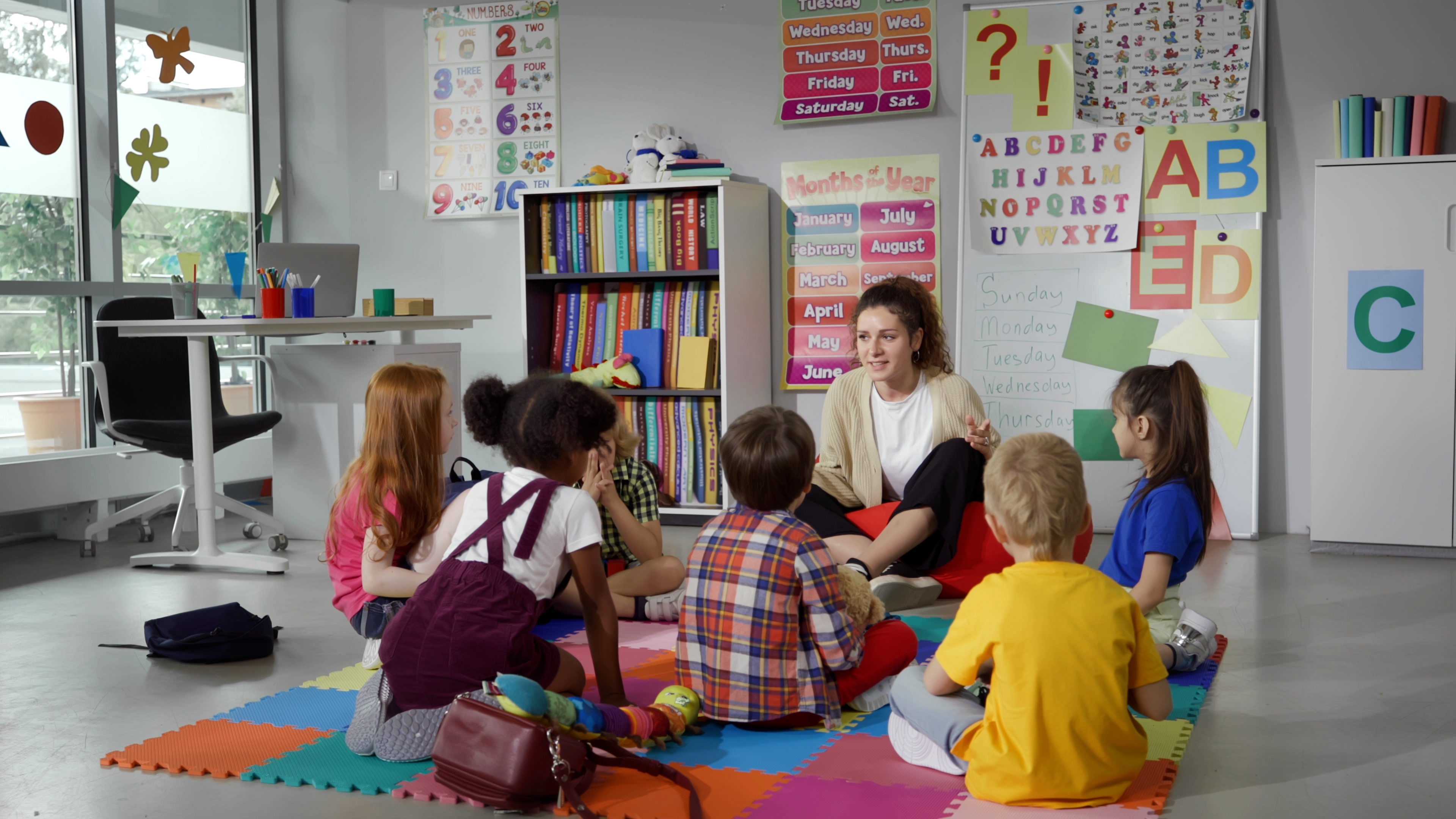
Educator Insight: A developmental lens helps the teacher recognize that gross motor control and postural stability are still emerging at this age. Mateo’s body may need movement to maintain alertness and attention. The teacher integrates short “movement moments” — stretching, songs with motions, or animal walks between transitions — which help regulate his arousal and make group time more successful.
Key Takeaway: Movement supports attention. Embedding motor activity in daily routines helps young children regulate their energy and focus.
Early Elementary – The Determined Dresser
Lina, a first grader, struggles to zip her jacket and tie her shoes. She often asks for help or gives up quickly, and her peers sometimes tease her.
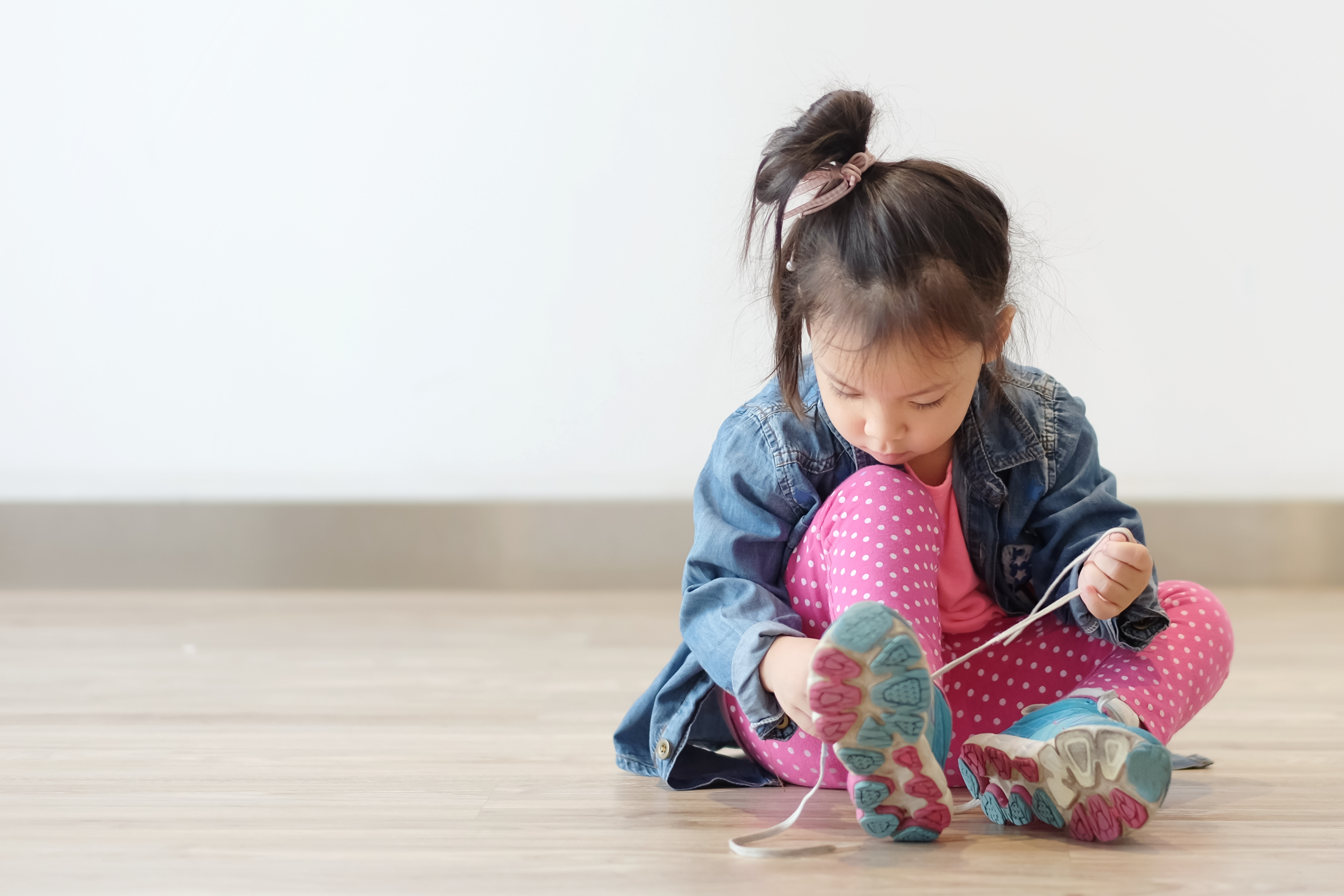
Educator Insight: Understanding that self-help tasks draw on fine motor planning and sequencing allows the teacher to provide practice opportunities during play (e.g., using dressing dolls or threading beads) and to celebrate small successes. The teacher also collaborates with the occupational therapist to integrate hand-strengthening stations during morning centers.
Key Takeaway: Daily routines like dressing or managing materials are valuable contexts for building independence, confidence, and motor planning skills.
The Bigger Picture: Movement, Brain, and Learning
Motor activity stimulates neural systems that underlie attention, memory, and executive function. Research shows that children who engage in regular physical movement demonstrate improvements in focus, working memory, and academic performance (Diamond, 2015; Donnelly et al., 2016).
For educators, this means that fostering active, movement-rich learning environments — from dance and play to hands-on science and outdoor exploration — is not just “extra.” It’s core to how young brains develop.
Questions to consider as you progress through this course:
- Think about a child in your classroom who struggles with focus, writing, or participation. Could motor skill development be a factor?
- How could you build more movement or fine-motor strengthening into your daily routines?
- How do your classroom expectations align with typical motor milestones for your students’ ages?
Developmental Progression
In this section, educators will explore how motor skills unfold from infancy through early childhood — beginning with reflexive movements and progressing toward coordinated, intentional actions. You’ll learn how early reflexes lay the groundwork for voluntary control, how gross and fine motor skills typically develop across ages, and why timely observation during this period is essential. The section also highlights key developmental principles such as the cephalocaudal (“head-to-toe”) and proximodistal (“center-outward”) trends, helping you understand why big body movements emerge before fine motor precision.
The Role of Reflexes in Infant Motor Development
In the first few months of life, infants rely on reflexes—automatic, involuntary movements that are present at birth and governed by the brainstem. These reflexes are essential for survival and provide the foundation for later voluntary motor development.
Some key reflexes include:
Rooting reflex: Helps babies turn their head toward touch on the cheek to find a nipple for feeding.
Moro reflex: A startle response that causes babies to extend their arms and legs suddenly when they feel a loss of support.
Grasp reflex: When you place a finger in an infant’s palm, they will instinctively grasp it.
Stepping reflex: If held upright with their feet touching a surface, babies will appear to walk.
While reflexes may seem simple, they play a vital role in helping infants interact with their environment, strengthen muscles, and build neural connections. As the brain matures, these early reflexes are not simply “turned off” to make way for voluntary movements—instead, many reflexes are actively adapted by infants into intentional, goal-directed actions.
For example, when an infant turns their head to one side, the Asymmetric Tonic Neck Reflex (ATNR) causes the arm on the face side to extend reflexively. Over time, babies can learn to harness this extension to initiate a reach toward a nearby toy—shaping reflex activity into purposeful motor behavior.
Delays in reflex integration—or failure to appropriately adapt reflexes—can be early signs of developmental differences and may warrant further evaluation. In partnership with families, educators can share observations, model simple activities, and celebrate milestones—helping parents recognize and nurture these emerging skills at home.
Overview of typical motor milestones
In this section, we review the developmental progression of gross and fine motor skills. The milestones outlined below represent typical age ranges during which most children acquire foundational movement skills — but they are general guidelines, not strict timelines. Every child develops at their own pace, and it is normal for some to reach milestones earlier or later than others.
At the same time, early motor experiences and timely observation matter. Children’s motor systems develop most rapidly in the first years of life, and practice during these “windows of opportunity” helps strengthen emerging neural connections. Subtle differences — such as a child consistently favoring one side of the body or struggling to coordinate new movements — can provide important clues. When educators and caregivers are knowledgeable about developmental trajectories, their observational skills become powerful tools for early engagement and support.
Cultural practices, environmental opportunities, individual temperament, and neurological variation all influence the pace of motor development. As educators, our role is to honor each child’s unique developmental path while providing rich opportunities for movement, practice, and feedback. By pairing awareness of individual differences with timely observation and responsive action, we help ensure that every child builds the strong motor foundations needed for lifelong learning and participation.
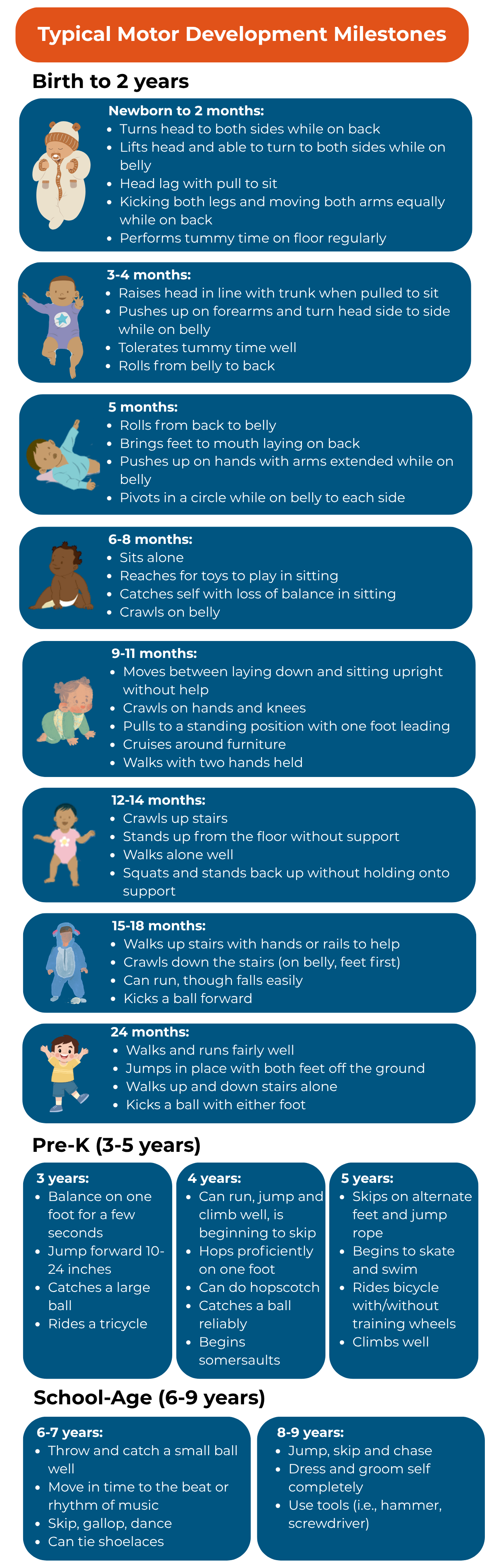
The following chart outlines typical developmental milestones from birth to age 8. The video that follows provides a deeper understanding of these developmental milestones.
Case Study and Activity
Activity: Case Study
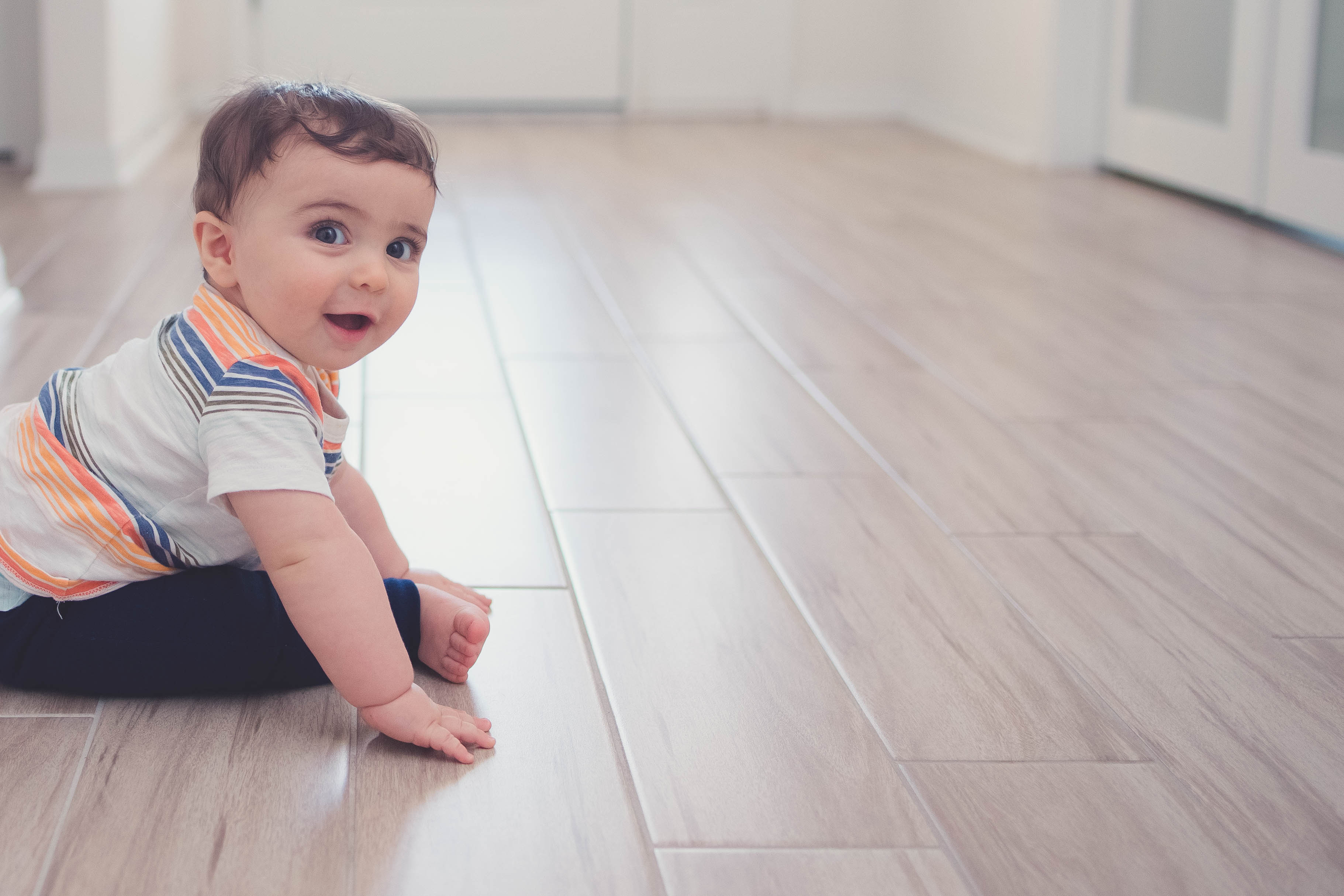
Using what you have learned about developmental milestones, read the following case study and answer the questions below:
David is a 10-month-old who loves to move around the floor. He doesn’t have any apparent delays; but according to his teacher, he is the only baby in his class who doesn’t creep (4 point/hands and knees). Instead of crawling, he scoots around on his butt in a seated position. He is effective in moving around the classroom to play with new toys and loves to move. He can get in the hands and knees position but prefers to scoot when it’s time to locomote.
Using what you have learned about developmental milestones, complete the activity below.
Match each motor skill on the left to the age group on the right in which it typically emerges.
Drag and drop the terms on the right to match with the corresponding terms on the left.
- Brings feet to mouth while lying on back
- Jumps forward and balances on one foot
- Begins crawling on hands and knees
- Takes independent steps and squats to pick up objects
- Ties shoelaces and skips with control
- 3 to 5 Years
- 12 to 14 Months
- 5 Months
- 6 to 8 Months
- 6 to 9 Years
Additional Resources
Why motor milestones tend to follow a certain sequence
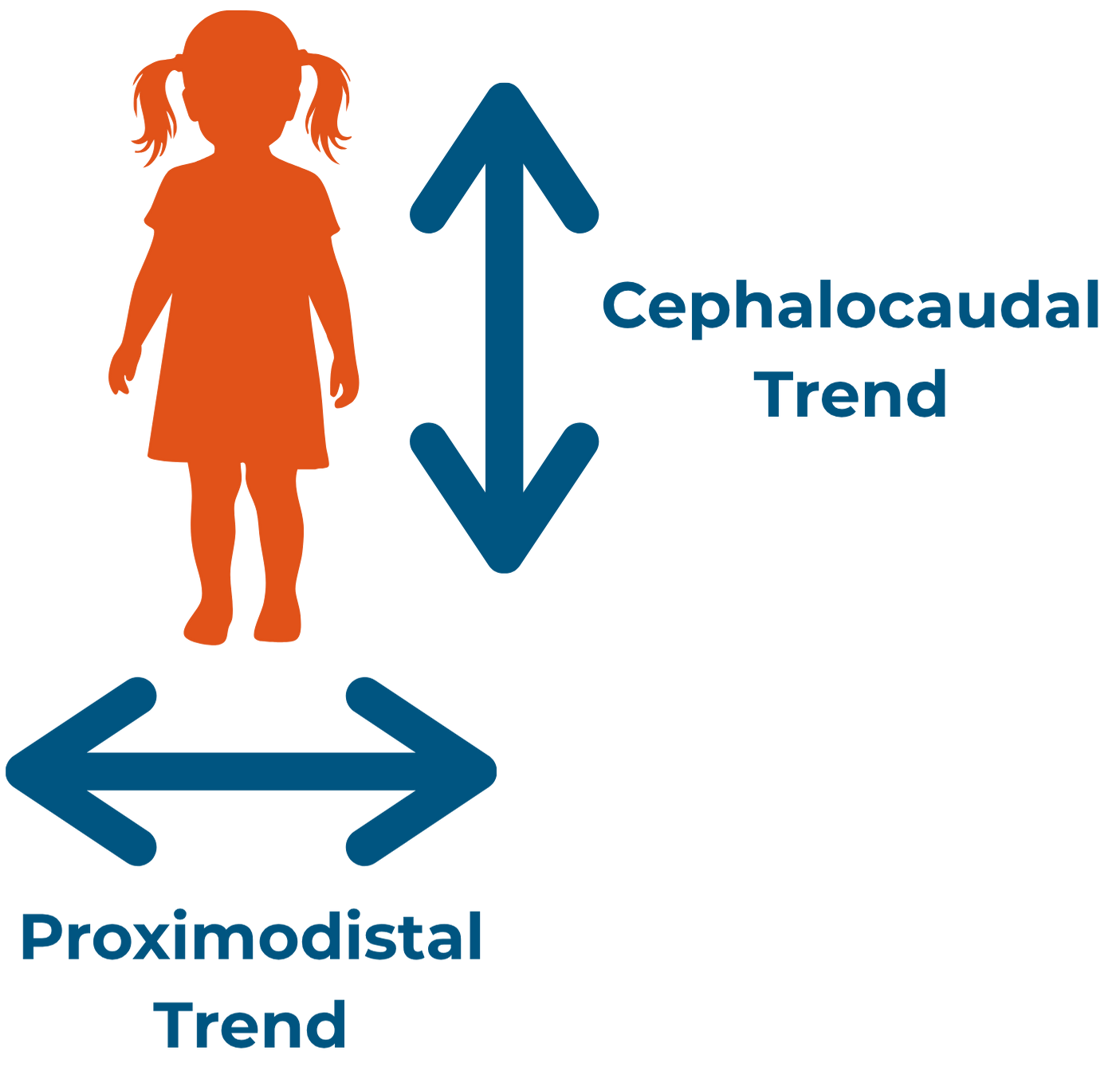
Cephalocaudal Trend (“Head to Toe”)
The cephalocaudal trend refers to the pattern of development that occurs from the head downward through the body.
- “Cephalo” means head; “caudal” means tail or lower body.
- In practice, this means babies first gain control of their head and neck, then their shoulders and arms, followed by the torso, and eventually their legs and feet.
Examples:
- A baby can hold up their head before they can sit upright.
- Sitting comes before crawling, and crawling before standing or walking.
This pattern reflects how the brain develops and sends motor signals from top to bottom, with the upper nervous system maturing earlier than the lower regions.
Proximodistal Trend (“Center to Extremities”)
The proximodistal trend describes development that progresses from the center of the body outward to the limbs.
- “Proximo” refers to the center or midline of the body, while “distal” refers to the outer parts (like fingers and toes).
- Children first gain control of their core muscles (like those in the trunk and shoulders), then their arms and legs, and finally their hands and fingers.
- This trend is also reflected in how children’s bodies grow. Infants have proportionally large heads and torsos compared to their limbs, a reflection of the earlier development of central body systems. As children grow, their arms and legs lengthen and gain motor control, reflecting the outward progression of development.
Examples:
- Babies learn to swipe at toys with their whole arm before they can grasp with their fingers.
- They can stabilize their torso to sit before they can perform precise tasks like turning a doorknob or using scissors.
Why These Patterns Matter for Educators
Understanding these patterns can help educators recognize what types of movement to expect at each stage and why certain skills may take longer to emerge. It also helps in:
- Designing appropriate activities. Developmental progressions guide instruction, but they shouldn’t become gatekeepers. Educators can introduce fine motor activities while supporting the underlying postural skills, allowing both to develop in tandem.
- Recognizing typical vs. atypical progression.
- Supporting children with different developmental timelines—some may show strength in one area (e.g., gross motor) while still developing another (e.g., fine motor).
In summary, motor skills develop from top to bottom (cephalocaudal) and from the center to the extremities (proximodistal). These principles provide a biological roadmap for how motor skills emerge—and they help explain why core strength and big movements come before precise control of small muscles.
Key Aspects of Early Motor Development
Motor development in early childhood is a powerful driver of growth across every domain of learning. In this section, you’ll explore how gross and fine motor skills emerge and work together to support children’s independence, attention, self-regulation, and participation in classroom life. You’ll learn how large-body movements like running and balancing lay the groundwork for stability and coordination, while fine motor skills enable precision tasks such as writing, cutting, and self-care.
We’ll also examine how movement connects to thinking — through dynamic systems and embodied cognition — showing that when children move, they’re not just building muscles but also strengthening the neural pathways for focus, problem-solving, and executive function. Finally, you’ll see how motor competence supports social participation, helping children join play, collaborate with peers, and build confidence in their abilities.
Gross Motor Skills
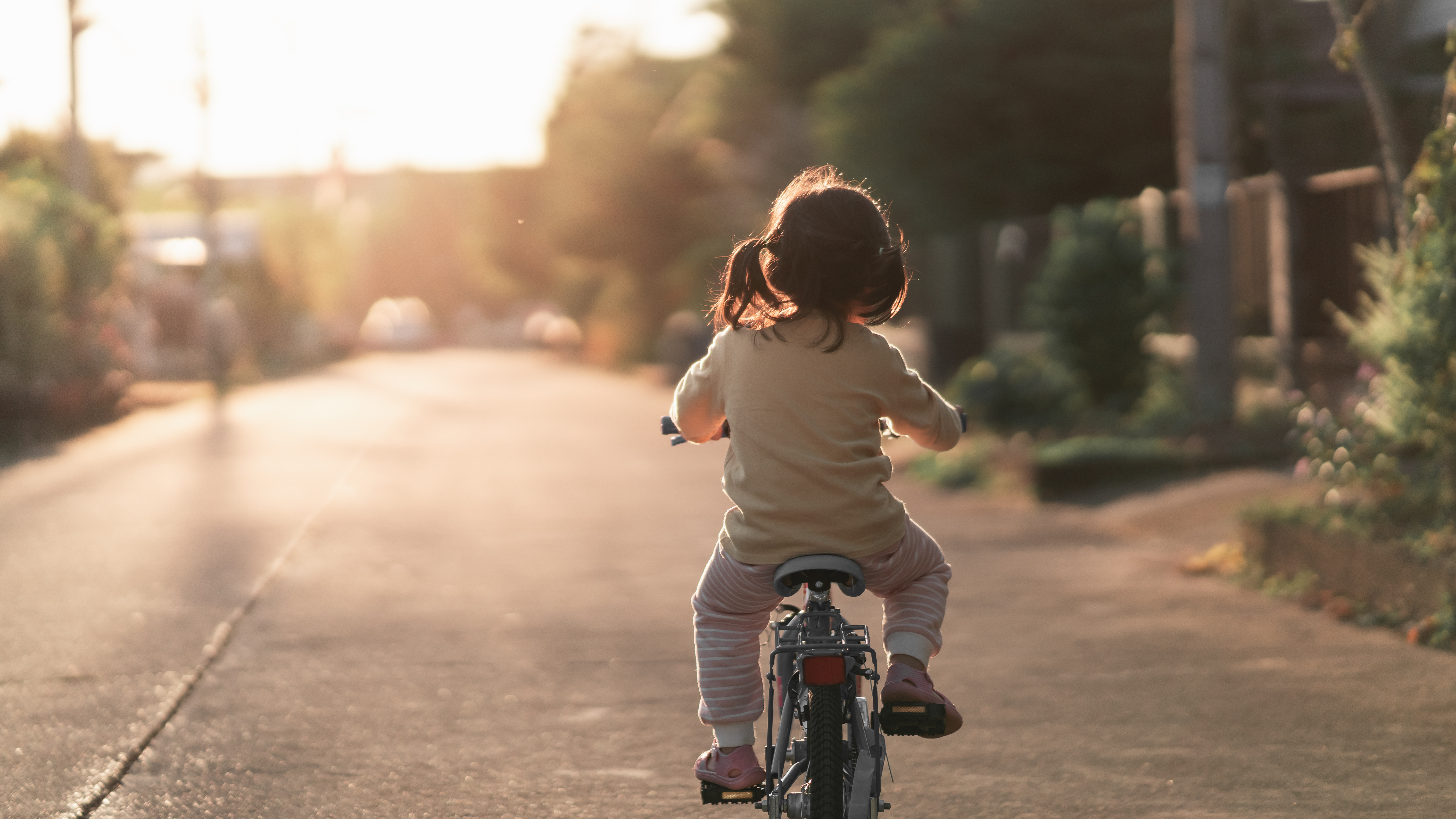
Gross motor skills involve the large muscles of the body—particularly those in the arms, legs, back, and torso. These are the movements that help children control their posture, balance, and full-body actions. Some of the key gross motor milestones include things like rolling over, crawling, sitting up, standing, walking, running, jumping, and balancing. Gross motor development begins early— starting with head control in infancy and gradually progressing toward upright movement and coordinated action. These abilities provide the physical confidence and strength children need to explore the world around them.
Why Gross Motor Skills Matter
Gross motor skills are essential for:
- Exploration and independence: Movement allows children to investigate their environment, seek out new experiences, and interact with peers.
- Play and social interaction: Running, climbing, racing, and playing basketball are not only physically enriching—they’re also social activities that help build friendships and collaboration skills.
- Navigating diverse environments: Whether it’s navigating a busy classroom, participating in a PE class, or exploring the playground, children rely on gross motor skills to move safely and confidently in different settings.
Fine Motor Skills
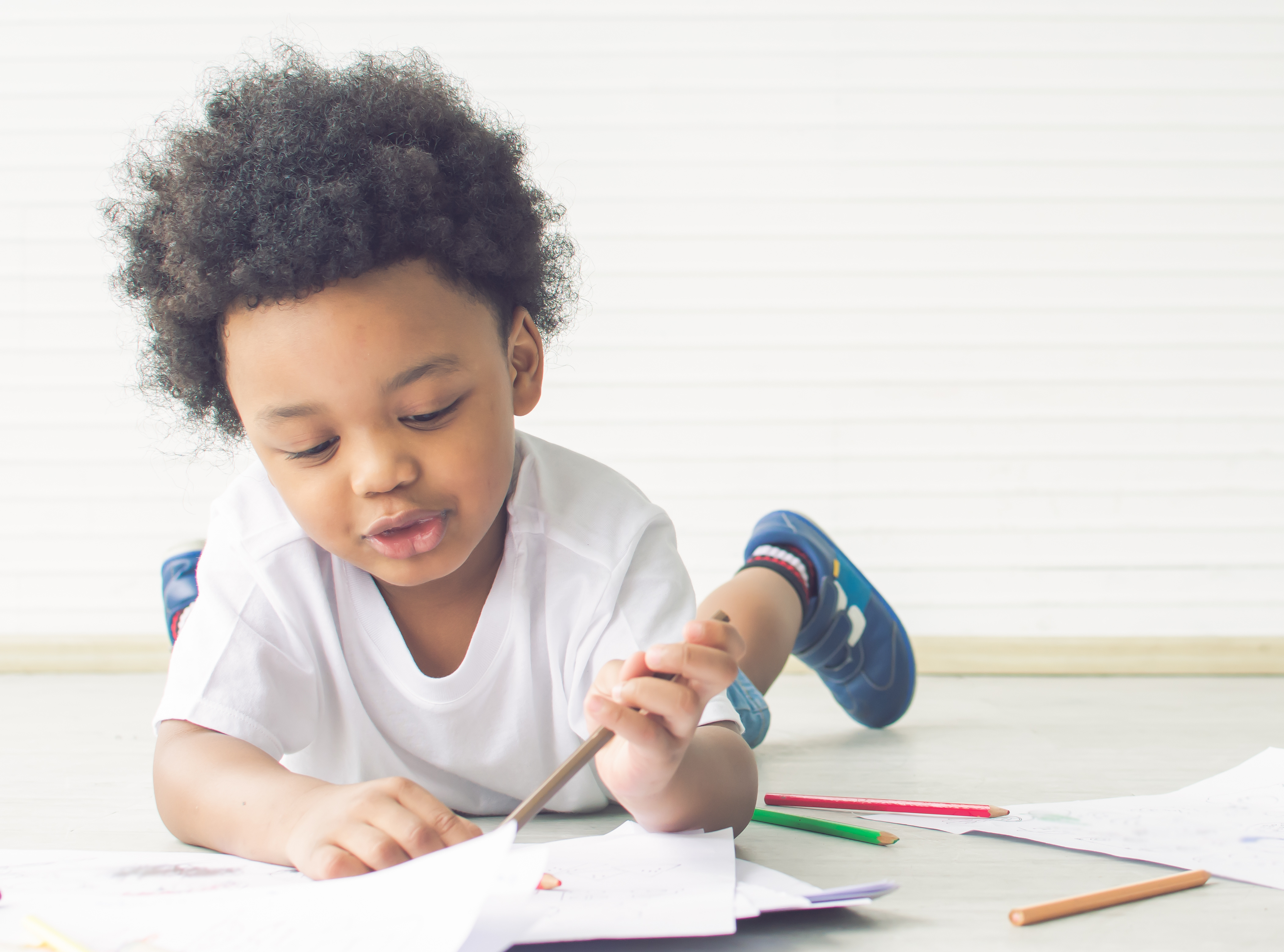
While gross motor skills focus on large movements, fine motor skills involve the small muscles, especially those in the hands and fingers. These skills require precision and coordination, often in combination with visual input—a connection we call hand-eye coordination. Some key fine motor milestones include reaching and grasping, hand-eye coordination, drawing, writing, tying shoes, buttoning or zipping clothing, and using tools, like pencils and forks. Fine motor development typically builds on a stable gross motor base—children need trunk control before they can sit still and use their hands effectively.
Why Fine Motor Skills Matter
Fine motor skills are especially important for:
- Building school readiness: Preschool experiences help children practice fine motor skills such as holding a pencil, cutting, and turning pages—abilities that support learning and independence in the early grades. *Academic achievement: Writing, drawing, using a keyboard, and manipulating learning materials all require fine motor precision.
- Functional independence: Self-help skills like feeding, dressing, and hygiene routines also rely on fine motor development.
To better understand the differences between fine and gross motor skills, watch the brief video provided below:
Bilateral Coordination and Handedness
As fine motor skills progress, children also develop bilateral coordination—the ability to use both hands together in a coordinated way. This is essential for tasks like tying shoes, cutting with scissors, or stabilizing paper with one hand while writing with the other.
Most children also begin to show a hand preference—or handedness—by age 3 to 5 (Scharoun & Bryden, 2014), although this can begin to emerge earlier, as early as 6 months (Campbell, Marcinowski & Michel, 2017), and continues to solidify into early school age (Bryden, 2000). It’s important to give children time and varied experiences to naturally develop their preferred hand without forcing a choice too early.
In summary, gross and fine motor skills work together to enable a child’s ability to move, play, learn, and participate in everyday life. As educators, we play a key role in observing, supporting, and celebrating each child’s motor development—both in structured activities and in the rhythms of daily classroom life.
Knowledge Check
Motor-cognitive connections: A Dynamic Systems Perspective
Motor development doesn’t just prepare children to move—it supports how they think, learn, and regulate themselves. From a dynamic systems perspective, motor and cognitive skills don’t develop in isolation. Instead, they emerge through ongoing interactions between a child’s body, brain, and environment. This means that as children gain new motor abilities, they also open up new opportunities to explore, focus, and solve problems.
When infants begin reaching, crawling, and walking, they’re not just practicing coordination—they’re actively reorganizing their brain and behavior. Each new movement allows children to access different objects, perspectives, and social interactions, which, in turn, drives new forms of learning. As Thelen and Smith (1994) argued, development is a process of self-organization across systems—where changes in one domain (like posture or balance) reshape what’s possible in others (like attention or problem solving). To learn more about Dynamic Systems Theory, feel free to watch the video provided below:
Key Cognitive Skills Linked to Motor Development
-
Executive Function: As children learn to plan and control their physical movements—like stopping themselves from running into the street or waiting their turn on the slide—they’re also developing core executive functions such as inhibition, working memory, and cognitive flexibility. Research shows that early motor experiences help scaffold these abilities by requiring children to anticipate outcomes, adapt to new environments, and shift strategies when something doesn’t work
-
Attention: Sitting upright, stabilizing the body, and orienting the head are all motor acts that support sustained attention. For example, postural control enables children to sit at a desk and focus on a task. When these physical supports are still developing, attention may look fleeting or inconsistent—not necessarily due to a cognitive delay, but because the motor system hasn’t yet caught up.
-
Self-Regulation: Self-regulation—managing emotions, behavior, and attention—is grounded in both cognitive and motor systems. Movement-based activities like yoga, dancing, or even simple balancing games help children practice regulating their bodies, which in turn supports emotional control and persistence during learning challenges.
Classroom strategies might include:
- Integrating movement breaks that involve coordination or balance
- Using action-based games to teach cognitive skills (e.g., “Simon Says” for inhibition)
- Encouraging physical play, which promotes social negotiation, problem-solving, and impulse control
Fine Motor Skill Development:
Gross Motor Skill Development:
We have also prepared sample lesson plans for children birth through age 8 that you can implement in your classroom or at home to pair movement with learning.
If you are a faculty member, you may also find the activities provided in this facilitation guide helpful when training pre-service educators on ways they can pair movement with learning in the classroom.
Movement and embodied cognition in early learning
In addition to dynamic systems theory, which emphasizes the interdependent and constantly evolving nature of motor and cognitive development, research on embodied cognition further supports the idea that motor activity is central to learning and thinking (Smith, 2005). Embodied cognition posits that the mind is not only connected to the body but deeply influenced by it—cognitive processes are grounded in the body’s sensorimotor systems.
For young children, this means that movement isn’t just a byproduct of development—it’s a driver of learning. For example, gesturing can support language development (Iverson, 2010), physical interaction with objects enhances spatial reasoning (Barsalou, 2008), and full-body engagement boosts memory and executive function (Glenberg, 2010). These experiences help “anchor” concepts in memory and make learning more meaningful. As such, classrooms that integrate movement—through play, dance, dramatic role-play, or kinesthetic learning—can promote stronger cognitive outcomes, particularly for young children still developing verbal and abstract reasoning skills.
Motor skills and social participation (e.g., group games, recess)
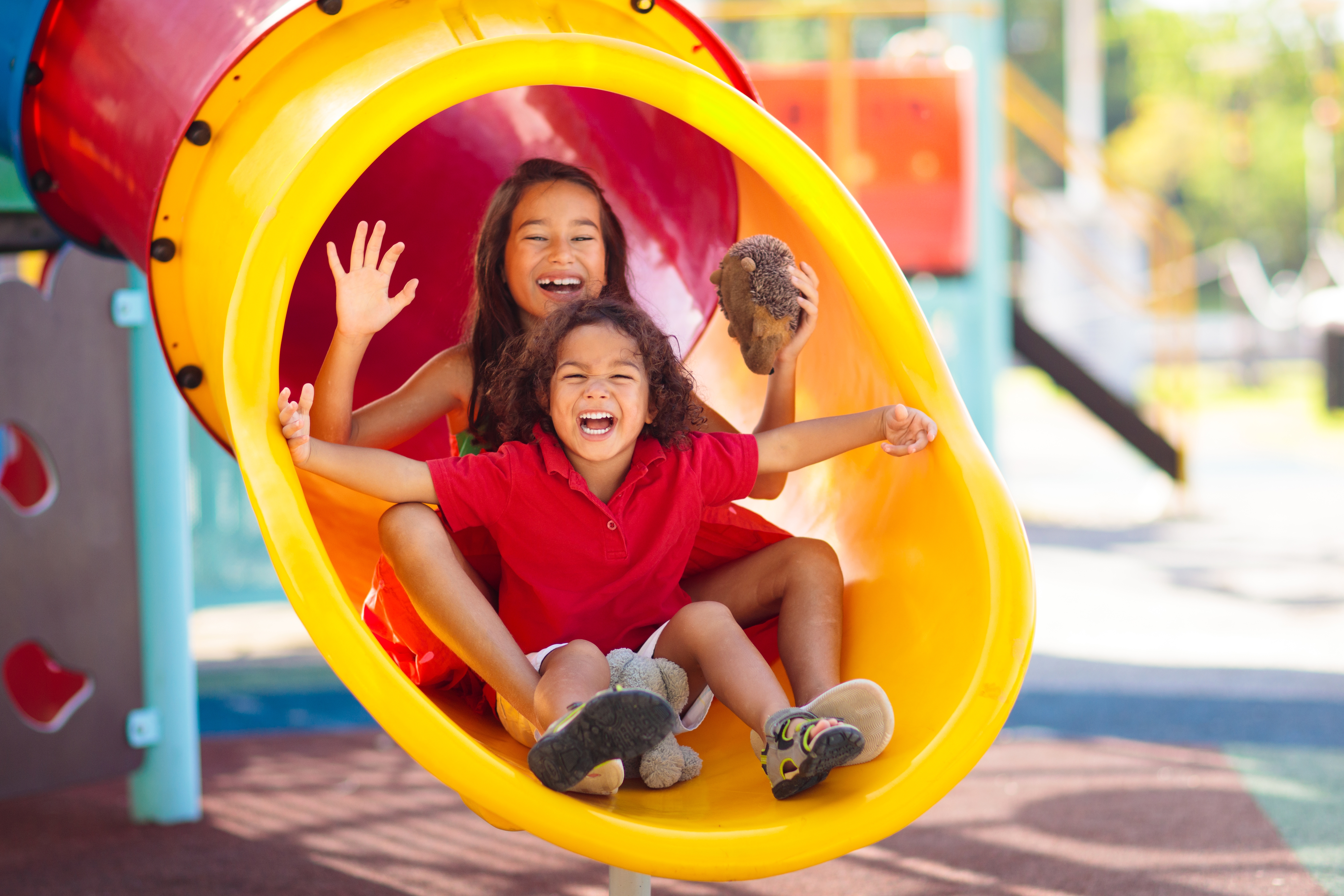
Motor development is not just about physical ability—it plays a key role in a child’s ability to connect with peers and participate in group life. On the playground, at recess, during physical education, or even after-school, children with well-developed motor skills are more likely to join in group games, collaborate with others, and build social confidence.
Group activities like tag, soccer, or even cooperative building tasks require coordination, timing, and spatial awareness—skills that develop through repeated motor practice. Children who struggle with these abilities may withdraw from physical play or be excluded by peers, which can affect their sense of belonging and social-emotional development.
Educators can support inclusion by offering scaffolded movement opportunities, adapting games for diverse abilities, and emphasizing cooperation over competition. Fostering motor competence is one way to promote social participation, reduce isolation, and build the interpersonal skills that underlie classroom community.
The Neural Basis of Early Motor Development
Motor development isn’t just about muscles—it’s deeply rooted in the brain and nervous system. From the first reflexive movements in infancy to complex coordination in elementary school, children’s motor skills emerge through the maturation of multiple brain systems working together.
Let’s explore the key neural systems and processes that support motor development in early childhood.
Neural systems involved in movement (motor cortex, cerebellum, basal ganglia)
Several key brain regions contribute to planning, initiating, coordinating, and refining movement:
Located in the frontal lobe, the primary motor cortex sends signals to the muscles, telling them when and how to move. It’s especially important for voluntary, goal-directed movements like reaching, grasping, or walking.
The cerebellum, located at the back of the brain, plays a major role in balance, posture, and coordination. It helps fine-tune movements by comparing what the body is doing with what it intended to do—allowing for smoother, more efficient actions. This region is particularly important for learning new motor skills like riding a bike or skipping.
The basal ganglia are a group of structures deep in the brain that help regulate movement, including movement initiation and automatic patterns like walking. They support habitual and rhythmic actions and help filter out unneeded movements.
These systems don’t work in isolation. They form a network that integrates sensory information, plans and initiates movements, and refines them based on feedback.
Motor Pathways: Connecting Brain and Body
These brain regions are linked through descending motor pathways that travel from the brain down the spinal cord to the muscles. The two main types are:
Corticospinal tract: Carries movement signals from the motor cortex to the spinal cord and out to the muscles. This is essential for voluntary, fine-tuned movements.
Extrapyramidal pathways: Involve the cerebellum and basal ganglia, helping with posture, coordination, and automatic movement control.
Sensory feedback loops travel in the opposite direction, returning information from the muscles and joints back to the brain via the spinal cord—letting the brain know whether to adjust, stop, or keep going. This feedback loop is essential for skill refinement and motor learning.
For example, when a child throws a ball:
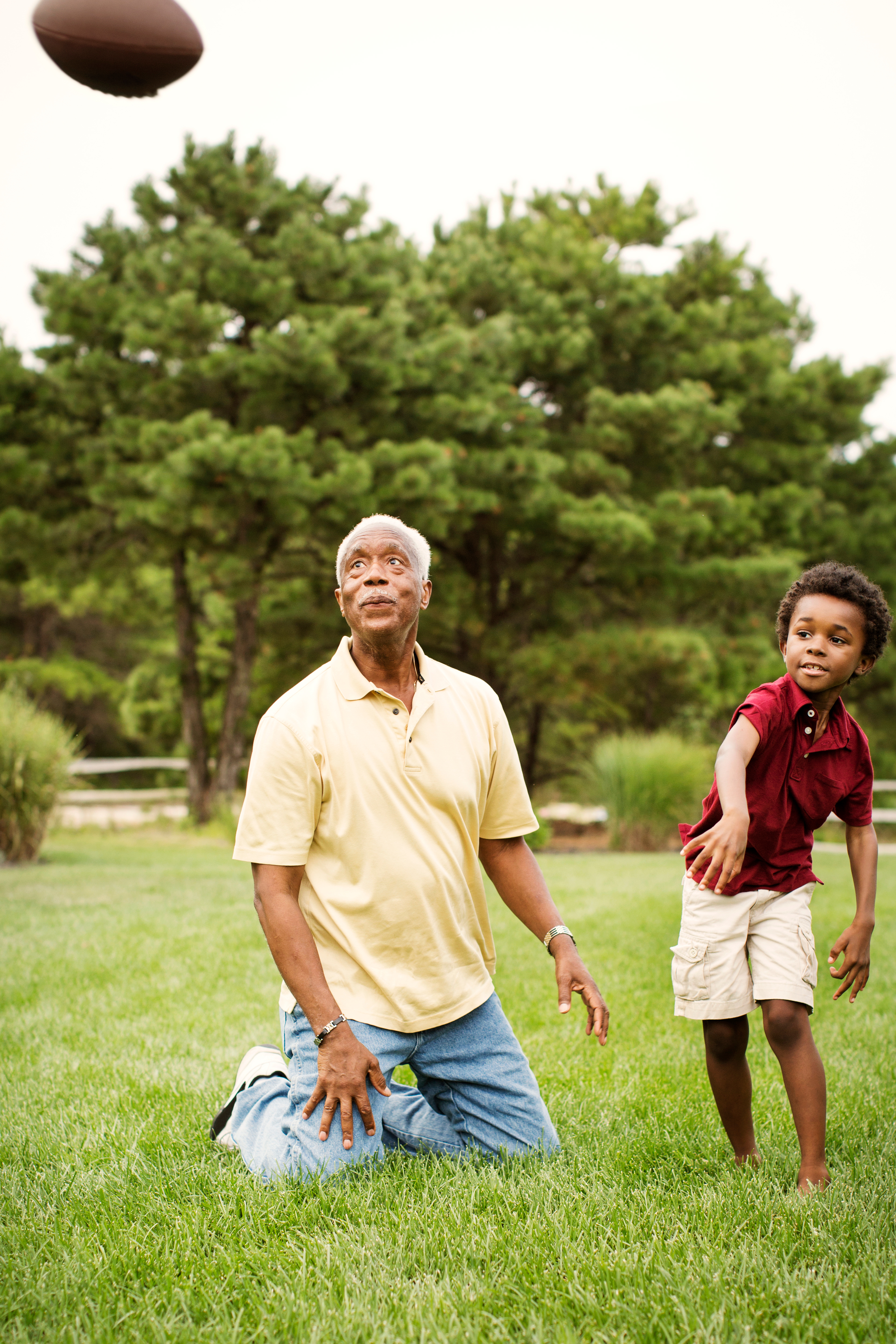
- The motor cortex plans and initiates the throw.
- The cerebellum fine-tunes the timing and trajectory.
- The basal ganglia help smooth the motion and maintain rhythm.
- Sensory feedback from the arm and shoulder provides real-time updates to adjust force or angle.
- If the throw doesn’t go as planned, the brain stores that information to try again with better coordination next time.
This dynamic, integrated process is what makes motor development such a powerful driver of brain development—it literally builds and refines the neural architecture of coordination, control, and learning.
The role of sensory feedback (proprioception, vestibular system)
Motor development depends heavily on sensory systems that give the brain information about the body’s position and movement. Two key systems are:
Proprioception
Proprioception is our body’s ability to sense its position in space. Receptors in the muscles and joints send signals to the brain about how the body is moving and where each limb is located. This allows children to move without constantly looking at their limbs—for example, reaching for a cup without needing to watch their hand.
Vestibular System
The vestibular system, located in the inner ear, helps with balance, posture, and spatial orientation. It tells the brain whether the head is moving or still, tilted or upright. It’s essential for stabilizing vision and coordinating head and body movements—especially when jumping, spinning, or climbing.

Together, proprioception and vestibular input provide essential feedback loops that help children maintain balance, navigate space, and adjust their movements in real time.
Brain plasticity and motor learning in early childhood
One of the most exciting aspects of early motor development is the brain’s plasticity—its ability to change and adapt based on experience.
In early childhood, the brain is especially responsive to movement and sensory input. When children practice new motor skills—whether it’s stacking blocks, skipping, or buttoning a shirt—their brain forms and strengthens new neural connections. Repetition, challenge, and variation are all key drivers of this process.
This means that rich, varied movement experiences—especially during the early years—are not just beneficial for physical development. They actively shape the architecture of the brain, supporting lifelong learning, attention, and coordination.
Key Takeaways for Educators
- Support motor development by encouraging movement-rich environments with varied opportunities for balance, coordination, and exploration.
- Recognize that children with motor delays may also benefit from activities that engage proprioceptive and vestibular systems (like swinging, climbing, or pushing heavy objects).
- Early intervention and consistent practice can rewire the brain—thanks to neuroplasticity—making motor learning more accessible over time.
Individual Differences
While developmental milestones offer helpful reference points, motor development is not a one-size-fits-all process. Each child follows a unique path shaped by a dynamic interplay between biology, experience, and environment. Some children may show early strength in coordination or agility, while others may take more time—or show different patterns entirely.
If we return to the dynamic systems view (Thelen & Smith, 1994), motor development arises from many interacting systems: the brain, muscles, senses, motivation, and the environment. This means that small differences in one domain (like posture or sensory processing) can shape the entire trajectory of motor learning.
A child who walks late may not have a motor “deficit”—they may have needed more time to strengthen core muscles, or they may have been more focused on language development. Likewise, a child who excels in climbing might benefit from frequent outdoor play opportunities that reinforce their strengths.
The role of the environment
As Ferreira et al. (2018) emphasizes, the environment plays a powerful role in shaping motor development. Children need opportunities to move in safe, stimulating spaces that encourage exploration, risk-taking, and repetition.
- Access to diverse movement experiences—like climbing, balancing, riding, and dancing—fosters both gross and fine motor skills.
- Physical environments matter—factors like flooring (e.g., grass, linoleum, carpet), home layouts (e.g., access to stairs under adult supervision), and availability of appropriately scaled objects (e.g., child-size furniture, jungle gyms) all influence how and when children practice new movements.
- Children in environments with limited movement opportunities (e.g., too much sitting, unsafe outdoor areas) may experience slower motor growth—not due to ability, but due to lack of practice.
- Caregiving practices also play a role—for instance, variability in how long infants are swaddled may influence how and when motor milestones emerge, by affecting opportunities for free movement. Additionally, some families may promote early physical independence (e.g., encouraging crawling or walking), while others emphasize physical closeness and protective caregiving longer, shaping early movement patterns.
- Structural and economic systems shape opportunity—decisions like funding cuts or incentives to early education, the lack of public transportation, or underfunded afterschool programs directly affect children’s access to movement-rich environments. These are not just “political” issues; they are well-documented social determinants of development in the research literature.
Recognizing signs of motor delay or atypical development
Educators are often among the first to notice when a child’s motor development seems off-track. While individual variation is normal, certain signs may indicate a motor delay or neurodevelopmental difference.
Red flags may include:
- Persistent head lag beyond 4 months
- Not sitting by 9 months or walking by 18 months
- Frequent falls, clumsiness, or trouble with stairs beyond age 2
- Avoidance of fine motor tasks like coloring, cutting, or manipulating small objects
- Delayed or unusual movement patterns (e.g., toe-walking, stiff or floppy limbs)
These may be signs of:
- Cerebral Palsy: A group of movement disorders caused by early brain injury, often marked by muscle stiffness, weakness, or coordination challenges.
- Autism Spectrum Disorder (ASD): Autistic children may show delays or differences in motor planning, coordination, or imitation.
- Developmental Coordination Disorder (DCD): A condition marked by persistent difficulties in motor coordination that interfere with daily functioning.
Early recognition and referral to collaborating specialists can lead to more effective motor outcomes by initiating intervention earlier.
Collaborating with specialists
Educators play a central role in supporting children’s motor development—but they don’t do it alone. Collaboration with specialists helps ensure that each child receives the right supports within their least restrictive environment (IDEA, 2004)—most often, the classroom itself. Under the IDEA Act, early intervention and related services must be provided, whenever possible, in the child’s natural environment, which includes daily classroom routines, playgrounds, and peer interactions.
Effective collaboration means more than just making referrals; it’s about ongoing communication, shared problem-solving, and integration of strategies into classroom practice. Educators observe children daily and can offer insights specialists might not see in short sessions, while specialists can provide targeted expertise that enhances daily instruction.
Key Specialists and Their Roles
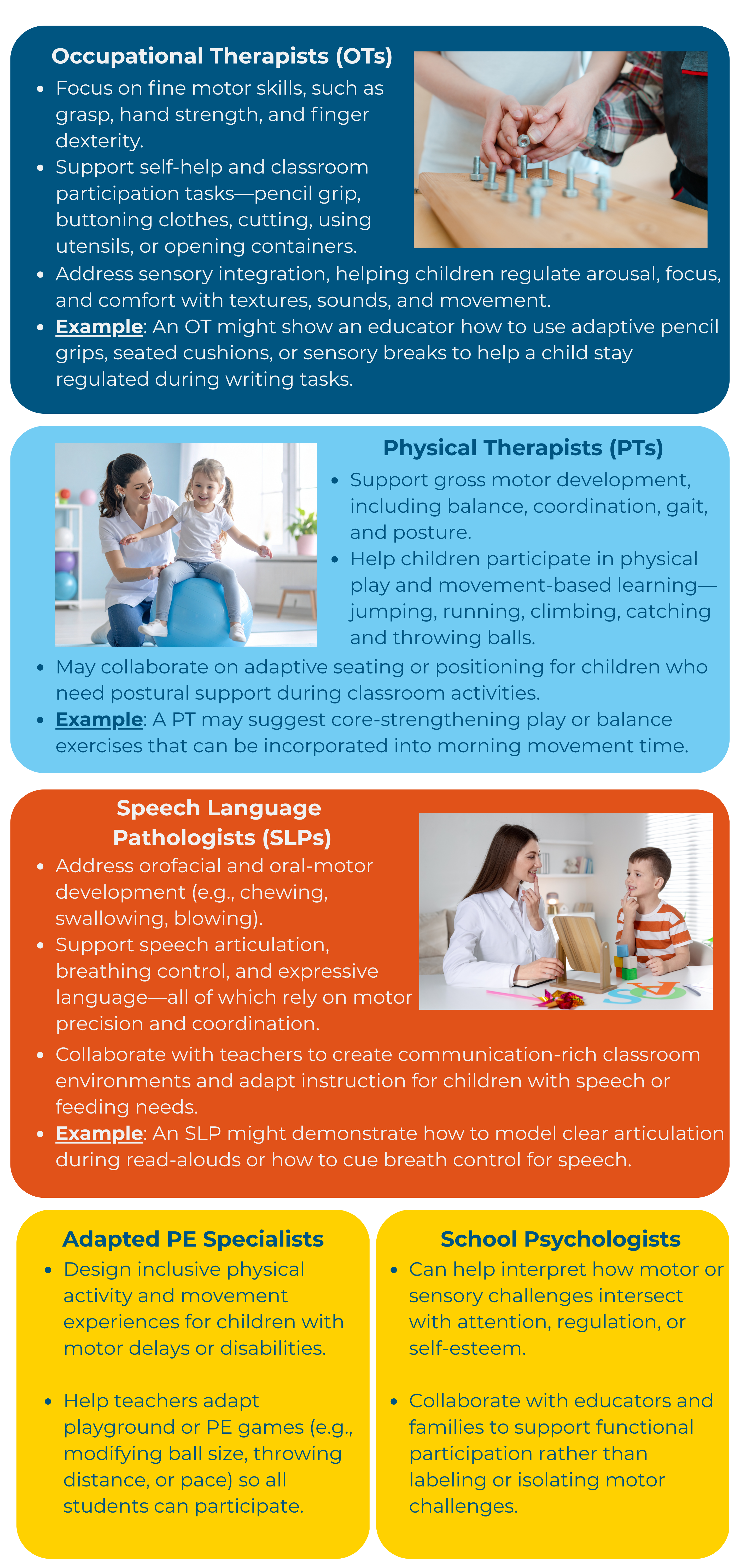
How Collaboration Works in Practice
Collaboration may involve:
- Sharing classroom observations about how the child moves, participates, and responds to different tasks.
- Co-developing support plans that connect therapy goals with classroom routines.
- Integrating therapy strategies into daily activities (e.g., strengthening fine motor skills during art, using core exercises before writing tasks).
- Attending IEP or IFSP meetings to align goals and share insights.
- Ongoing check-ins to monitor progress and adjust supports as children grow.
Educator Insight: Effective collaboration is not about “handing off” responsibility but building bridges between classroom learning and therapeutic goals. When educators and specialists work together, children receive consistent, coordinated support that promotes progress across settings.
Universal Design for Learning (UDL) strategies to support motor access
UDL offers a proactive framework to make movement-based learning accessible to all children, including those with motor challenges. Rather than waiting for a problem, UDL encourages designing flexible options from the start.
Some UDL-informed strategies include:
- Multiple means of action: Allow students to show learning through movement, drawing, speaking, or assistive technology.
- Flexible tools and materials: Use adaptive scissors, pencil grips, varied seating (like wobble stools or cushions), and accessible art supplies.
- Choice in movement: Let children choose between sitting, standing, or floor work; incorporate movement breaks that suit different ability levels.
- Embedded supports: Offer visuals, hand-over-hand guidance, or peer modeling to scaffold motor tasks.
By adopting UDL, educators can normalize variability, reduce stigma, and ensure that every child—regardless of ability—can engage in meaningful movement and learning.
Motor development is deeply personal and highly responsive to both individual traits and environmental input. By recognizing variation as the norm, advocating for inclusive practices, and collaborating with specialists, educators can play a transformative role in supporting every child’s movement journey—and by extension, their learning, confidence, and wellbeing.
The role of educators in supporting motor development
As educators, you play a powerful and often underappreciated role in supporting children’s motor development. Whether you teach preschoolers learning to balance on one foot or third graders mastering handwriting and coordination, your daily routines, learning environments, and instructional choices can help children move with confidence and purpose.
You Are a Brain-Builder
Every time you provide a child with the opportunity to move—whether through a game, a movement break, a hands-on task, or outdoor play—you are helping to build their brain. Movement strengthens the neural systems that support not only motor skills, but also attention, executive function, and social-emotional development.
You Create Developmentally Rich Environments
Children need safe, flexible spaces that encourage exploration, trial and error, and physical challenge. But supporting motor development isn’t just about giving children time to play — it’s about how educators observe, interpret, and scaffold those play experiences.
Strong knowledge of gross and fine motor development allows teachers to notice subtle patterns: who is ready to climb higher, who needs more stability, or who is still developing grip strength. Observation guides the selection of materials and challenges that are “just right” — neither too easy nor too difficult — helping children build confidence and coordination through success and practice.
You Are an Early Observer and Advocate
You are often the first to notice when a child struggles with balance, coordination, or fine motor tasks. Your observations can lead to early intervention, especially when shared with families and specialists like occupational or physical therapists. Early support changes outcomes.
You Shape Access and Equity
As someone who works with young children, you are often the first to notice when a child struggles with balance, coordination, or fine motor tasks. Your observations are powerful—and when shared with families and specialists like occupational or physical therapists, they can lead to timely support. Early intervention changes developmental outcomes.
But advocacy is not a one-way street. Partnering with families and communities is essential for equitable and culturally responsive practice. Rather than imposing a one-size-fits-all or Eurocentric view of “typical” development, educators can engage families in conversations about what is feasible and valued within their cultural, economic, and physical environments.
- Consider what movement looks like in a child’s everyday life: Do they have safe and accessible spaces to move? Opportunities to explore indoors or outdoors? Family expectations or cultural norms around safety, supervision, and physical risk?
- Ask caregivers what goals or concerns they have for their child’s physical development, and how you can work together to support them in contextually meaningful ways.
- Avoid deficit-based language and instead highlight how strengths and challenges show up differently across settings and cultures.
By observing with care and collaborating with humility, you help ensure that all children are supported in ways that honor their lived experience.
Supporting motor development doesn’t require special equipment or a separate curriculum. It requires intention, observation, and belief in every child’s potential to grow. Movement is not a break from learning—it is learning.
You are not just teaching lessons.
You are helping children take their next step—literally and developmentally.
Final Assessment
Additional Resources
Looking for additional examples and activities for embedding learning opportunities in movement? Check out the following video examples:
References
Download the following PDF to view the list of references cited throughout this course: